Leeds is a city with great history and which grew rapidly during the Industrial Revolution. Many grand properties were built by wealthy mill owners and industrialists as money flooded into the area in the 19th century, particularly around Headingley and Roundhay, while housing was also built extensively in other suburbs, such as Kirkstall, Chapeltown and Hunslet, as the economy grew and attracted workers to the city.
While many of these properties are now long gone, plenty of them remain, while housing was also widely developed in the Victorian, Edwardian and Georgian eras in Leeds and surrounding areas such as Rothwell, Pudsey and Morley. These period properties had great character and style and are very different to contemporary properties. Not only are they usually larger, with more rooms and higher ceilings, they also feature more decoration and ornamental styling in features such as sash windows, wall and ceiling coving, architrave, skirting boards, staircases and fire surrounds. As a result, it can be hard to match period properties with modern interior features such as blinds, but here we will help you with this process.
Do blinds work in period properties?
Yes, blinds can work in a period property, as long as you suit them to the window in terms of style and how it operates. So you need to consider how the window opens (outwards or upwards), the depth and shape of recesses, how far handles and catches protrude and the condition of the window frame. Sometimes there are original features in a window, such as stained glass, which should really be on display, so make sure a blind doesn’t cover these up and mean you are losing a great, standout feature.
This means that blinds need to respect the original feature, its shape, how it looks and how it operates, as you don’t want to lose any of this character. You still want to maximise and control natural light, but you need to keep key architecture visible and allow for how a window operates. It is perhaps better to consider made-to-measure blinds which can be made to suit the exact proportions of the window and how it functions, rather than gambling on a standard product which might not work.
Why are period properties different?
Most period properties have window recesses, which provides you with an option of fitting a blind in the recess or outside the recess. This has an impact on light control and can create gaps if you opt for inside the recess and the wall isn’t straight, which is a common problem in period homes. Sometimes a recess is shallow and a blind will interrupt how a window operates, so you are restricted in what type of blind you can fit.
Period properties often have larger windows or windows with different proportions. There may also be a problem with surrounding plasterwork and how a blind can be fitted, you can’t always be sure that plasterwork condition is consistent in different areas. You may also encounter window frames with decorative mouldings which require careful handling, or which don’t present a stable fixing for a blind. So again, this could restrict what you can install. In a period property you may have two adjacent windows which require different blinds, so this presents some unique challenges in terms of styling and themes.
Which blinds work in a period property?
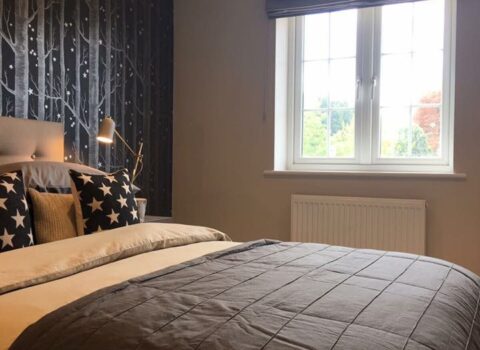
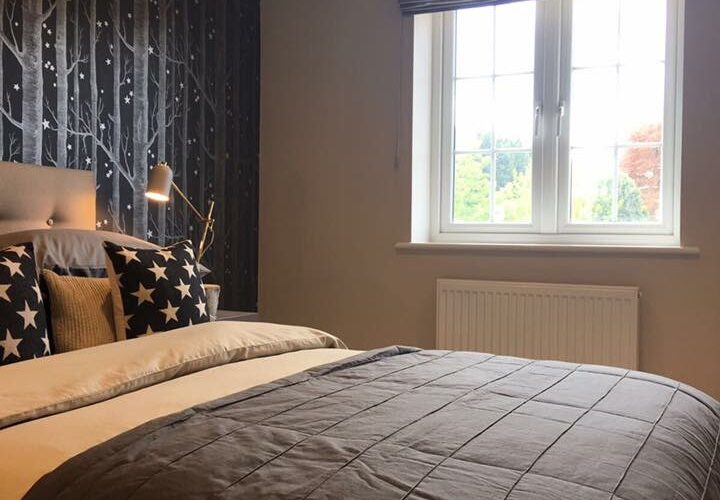
Period properties tend to benefit from classic designs and materials. So roman blinds are a popular choice, and in a number of different rooms, such as living rooms, bedrooms and dining rooms, because the fabric and colours add depth and texture. Venetian blinds are a simple design which can complement timber features in a period property, particularly if you opt for a wooden finish which matches the finish of your interior.
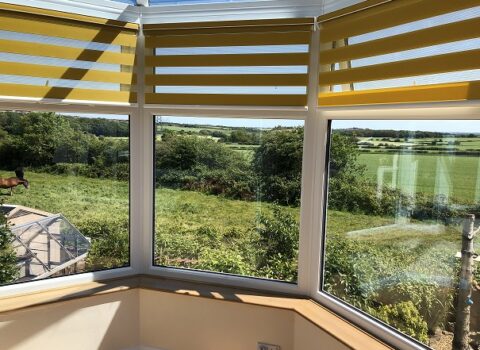
Many period properties have large bay windows, for which individual blinds in each section tend to work better than one large blind, such as perfect-fit blinds or individual venetian blinds.
Choosing blinds for a period property
The golden rule when choosing blinds for a period property in Leeds, is to start with the window and not the blind. You should assess the condition of the window and the surrounding walls, and check the operation of the window. This may dictate what type of blind you can install. You also need to consider the architectural features of the window and whether a particular blind design either covers these up, or whether it complements the design generally. Ultimately you want to maintain the historic character of a period property, so this needs to be your primary consideration when choosing the style, fabric, colour and position of a blind.
Once you are settled on a style of blind for your period property, contact Solaire Blinds & Shutters to book a free consultation.